
Thanks to its powerful engine, Ford’s name is synonymous with power. However, just like any car, issues can arise. If you’re ever hearing a knocking or pinging noise from your engine, there may be underlying issues that need to be addressed immediately. Since several factors can cause the engine to produce such sounds while running, it’s important to rule out everything to get to the root. If engine problems aren’t fixed quickly, then it can lead to significant repairs and expenses. In this article, we’ll discuss the factors and repair solutions behind engine sounds.
4 Factors Causing Engine Knocking/Pinging Sound in Ford Vehicles
1. Low Quality Fuel
Nowadays, all modern Ford vehicles are equipped with engines that require fuel with a specific octane rating. If you use low-octane fuel, your vehicle may experience combustion issues, leading to an engine knocking/pinging sound. In fact, the engine control unit (ECU) in your Ford is designed to expect high-octane fuel; therefore, if it senses low-octane fuel, it will reduce your vehicle’s power and fuel efficiency. Please note that high-octane fuel is preferred because it’s more stable than low-octane fuel and less prone to auto-ignition.
2. Carbon Buildup in the Engine
Over the years, as your Ford accumulates miles, unburnt fuel and oil residues can form carbon deposits on the engine’s internal components, often leading to poor engine efficiency and glowing hot spots. These are dangerous because they’re inside the combustion chamber, where they can ignite the fuel-air mixture. When this is happening, you’ll hear a knocking or pinging sound coming from the engine. In addition to that, you’ll also notice that the compression ratio of the engine reduces drastically due to carbon buildup. A combination of higher compression and hot spots in your engine makes the air-fuel mixture more prone to uncontrolled ignition.
3. Malfunctioning Knock Sensor
Your Ford comes equipped with a host of sensors that are responsible for monitoring the various critical functions in your vehicle. For example, the knock sensor monitors the knocking sound produced by the engine and sends signals to the engine’s computer to adjust the timing. If you’re driving a Ford with a bad knock sensor, it might fail to detect an actual knocking or pinging sound from the engine or send an erroneous signal to the ECU, which will change the engine’s timing and reduce its performance. Always keep in mind that if the knock sensor fails to detect the actual knocking or pinging from your vehicle’s engine, and continues to detonate without stopping, it can lead to complete engine failure.
4. Engine Overheating
The combustion process in the engine produces too much heat, which drastically increases the likelihood of spontaneous ignition in your Ford. This issue is another cause of the knocking/pinging sound coming from your vehicle’s engine. Most of the time, excessive overheating of the car is caused by a failing cooling system that needs to be addressed immediately. The failure of the cooling system is mainly caused by coolant leaks, a faulty radiator, bad thermostats, or clogged coolant passages, all of which should be fixed quickly.
Cars and Trucks Engines 4Less: The Best Shop For Your Engine Woes
Cars and Trucks Engine 4Less is the most sought-after engine repair and rebuild shop in Hialeah Gardens, FL. Our state-of-the-art engine repair and rebuild facility is equipped with the latest tools and diagnostic equipment to provide your Ford with the best care it deserves. Call or contact us now at Cars and Trucks Engine 4Less, and our team of certified mechanics will have your engine woes fixed immediately!
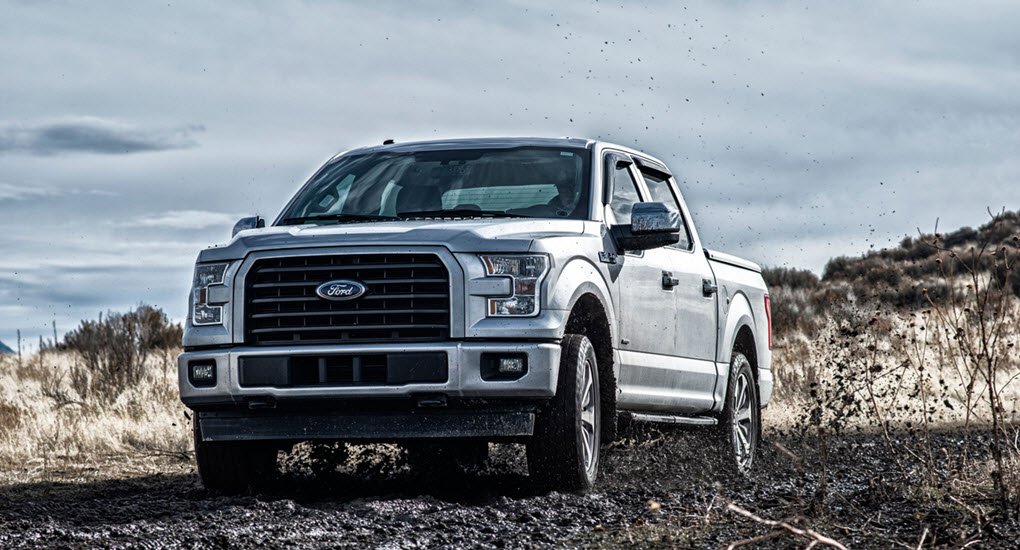
* Ford F150 Silver Truck Car image credit goes to: Wirestock.